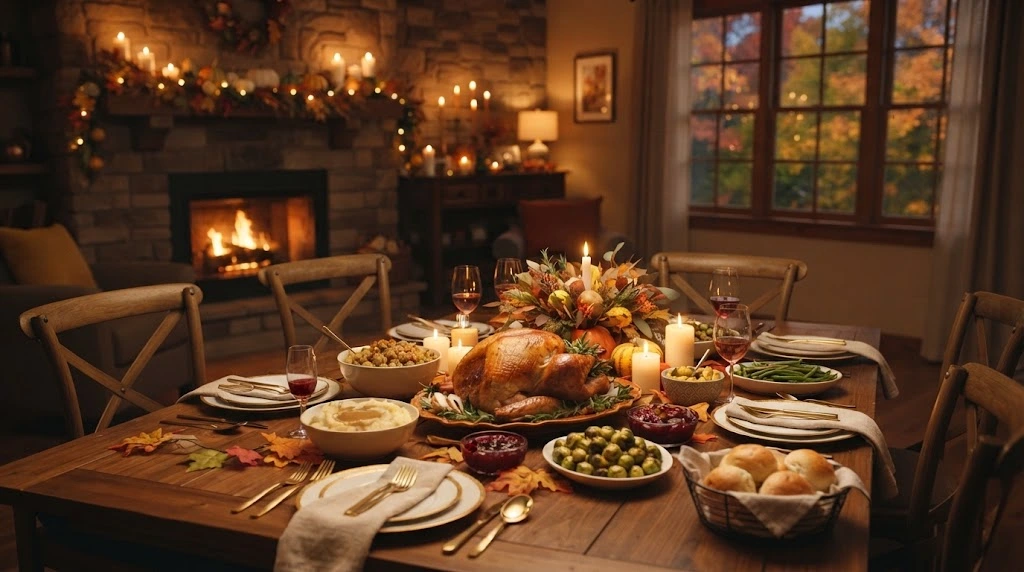
There is something curious about the way food disappears from a kitchen.
At first, everything is there. The vegetables on the counter, the meat, the flour, the eggs, the herbs, the jars and bottles you recognize by their shape even if you no longer bother to read the labels. Then someone starts chopping, someone else turns on the stove, a pot goes onto the heat and, after a while, all those things that seemed separate become one thing. A meal.
At the end, there is an empty plate and a pile of dishes.
Between those two moments lies the craft.
October 20 is International Chefs Day, a day dedicated to chefs around the world and to the profession that has turned cooking into something more than an everyday necessity. The day was created in 2004 by Chef Dr. Bill Gallagher, and Worldchefs uses it not only to celebrate the profession, but also to encourage chefs to pass their knowledge on to the next generation. (worldchefs.org)
That makes sense for a profession that is learned so much by watching.
There are, of course, culinary schools, books, recipes, temperatures and measurements down to the gram. But there is also the moment when someone shows you what dough is supposed to feel like, when an onion should stop cooking before it burns, when a sauce has thickened enough or when a piece of meat needs another few minutes.
These are not things you find in a list of ingredients.
It also explains why two people can be given the same recipe and end up with two dishes that have very little in common. The instructions are the same. The experience is not.
In a professional kitchen, that difference becomes even more obvious. A chef is not preparing one dish and then waiting to see what happens. Things overlap. Something is simmering, something else is frying, another dish needs to be plated, one order has to leave the kitchen and the next one has to be started. Behind a plate that reaches a customer is a sequence of operations the customer has no reason to see.

Daddy Of The Patios Barbeque Grilling Daddy BBQ Grill Dad T-Shirt
That may be why good food can look so simple. A well-made dish does not show the hours of preparation. It does not show the ingredients that were cleaned, portioned or prepared before the restaurant filled up. It does not show the attempts that came before a dish became reliable enough to be put on a restaurant menu. It only shows the result. And the result can be eaten in ten minutes. The ingredients, however, have a much longer story. Before there is a kitchen, there is the place an ingredient comes from. A potato begins in soil, not in a supermarket crate. A tomato has a season, a method of cultivation and a journey to the market or restaurant. Wheat goes through a long process before becoming flour. Fish does not begin on a refrigerated shelf.
For someone who cooks every day, these things are not necessarily abstract ideas. Quality, freshness, seasonality and the way an ingredient can be used are part of the work. The 2026 theme for International Chefs Day, “Food Explorers,” follows exactly this direction. The Worldchefs and Nestlé Professional campaign encourages children and young people to discover ingredients, learn where they come from, how they are grown or harvested, and the relationship between food, health and sustainability.
It is an interesting change of perspective.
Usually, education about food begins with the question of whether something is good or not. Sweet, salty, bitter, spicy. You like it or you don’t. Much less often does it begin with the question: where did it come from?
From there, things become more complicated in a useful way. An ingredient means people, work, seasons, transportation, production and sometimes a tradition that survived precisely because someone continued to use it. Chefs occupy an interesting position in all of this. They do not work only with food. They work with what people have built around it.
A recipe can tell us something about the climate of a region. About what could be preserved through winter. About what was available nearby. About influences that arrived through trade or migration. Sometimes all it takes is changing the main ingredient and part of the story changes with it.
That is why cuisine never stays completely still.

Unicorn Ramen Bowl Cute Japanese Food Noodles Chopsticks T-Shirt
One chef may preserve an old technique almost exactly as it was passed down. Another may modify it. A new ingredient may enter an old recipe. A dish that once belonged to a family may find its way into a restaurant and be discovered by people with no connection at all to the place it came from. In a way, every generation cooks with what it has received and adds something of its own.
Then passes it on.
This is one of the important ideas behind International Chefs Day. Worldchefs describes the day as an opportunity to celebrate the profession, but also to create change in communities and make a difference in the lives of the next generation. Activities associated with the day have included cooking workshops, farm visits, gardening, food education and other experiences that allow children to discover food beyond what they see on their plates. It is a form of education that is difficult to replace with a theoretical explanation.
When a child plants something, they see where it comes from. When they wash, cut and cook an ingredient, they begin to look at it differently. When they understand that a meal does not simply appear, it also becomes easier to understand why food should not be treated as something limitless. Food waste naturally becomes part of the same conversation. In older kitchens, the idea of using as much as possible of what was available did not need the word “sustainability.” Stale bread became something else. Bones went into stock. Vegetables that were no longer perfect could end up in a stew. Leftovers were not automatically synonymous with rubbish.
Some of these habits disappeared as food became constantly available. Now we can buy almost anything, almost any time. That makes it easy to forget how much work exists before an ingredient becomes available. A chef, however, is in a position where that waste can be seen very concretely. It shows up in quantities, portions, ingredients ordered, what remains and what can be reused. It is not only a matter of food philosophy. It is also practical.
Professional cooking is not only creativity and beautiful plates. It means long hours on your feet, pace, heat, repetition, organization and very little room for mistakes once orders start piling up. A dish can be excellent, but if it reaches the table too late, the customer's experience changes. An ingredient can be perfect, but if it is prepared incorrectly, it no longer matters how good it was to begin with. In the end, all of this disappears from the customer's view. And perhaps that is how it should be. Nobody goes to a restaurant to see the complete list of things that did or did not go according to plan in the kitchen. But that does not mean the work is not there. Quite the opposite. One measure of a well-executed craft is precisely how little effort remains visible. An experienced chef can make a complicated dish seem natural. A skilled cook can notice a problem before it reaches the plate. A chef who teaches their team does not pass on recipes alone, but all those small things that do not yet have a unit of measurement.
And then someone new comes along. They watch. They try. They make mistakes. They learn. And, after a few years, they find themselves explaining to someone else the same thing they once understood only after seeing it done. Perhaps that is also where the strong connection between food and memory comes from. What remains with us is not only the ingredients. It is the gestures, the smells, the meals, the kitchens and the people who showed us, without turning it into an official lesson, how something is done. International Chefs Day is, at its heart, about that continuity. About a profession that begins with ingredients and ends with people. About food as craft, but also as heritage, education and language. About chefs, certainly, but also about those who showed them how it is done and those they will teach in turn.
On October 20, chefs are celebrated. But their story begins long before they ever enter a professional kitchen. In a field, on a farm, at a market, inside an old recipe, in a hand that measured “by eye,” and in another hand that learned simply by watching. And at the end of all those things is what seems, at first glance, to be the simplest thing of all. A plate placed on a table.


Read more interesting stories

The Work Nobody Budgeted For. International Artist Day

From Childhood to Adulthood. We decorated the tree, stole something from the kitchen

The Christmas We Remember. Someone bought the presents, prepared the food